 I enjoyed my favourite French museum, the Musée d'Orsay (Orsay Museum, France), in Paris on 13 April 2007 in company of François and Valentine, whom I had not met for a long time. A former train station, the building is spacious, beautiful and bright. The art works are mainly masterpieces that tell us stories both individually and in connexion with their surroundings. As always, my admiration goes to the architects and artists, and my congratulations and best wishes to the staff.
13 April 2007
Exhibition at Musée d'Orsay (Orsay Museum, France) on 13 April 2007
Source and photos: http://horizons.free.fr/seikatsu/eng/memories/2007-04-13_fr-orsay.htm
 I enjoyed my favourite French museum, the Musée d'Orsay (Orsay Museum, France), in Paris on 13 April 2007 in company of François and Valentine, whom I had not met for a long time. A former train station, the building is spacious, beautiful and bright. The art works are mainly masterpieces that tell us stories both individually and in connexion with their surroundings. As always, my admiration goes to the architects and artists, and my congratulations and best wishes to the staff.
I enjoyed my favourite French museum, the Musée d'Orsay (Orsay Museum, France), in Paris on 13 April 2007 in company of François and Valentine, whom I had not met for a long time. A former train station, the building is spacious, beautiful and bright. The art works are mainly masterpieces that tell us stories both individually and in connexion with their surroundings. As always, my admiration goes to the architects and artists, and my congratulations and best wishes to the staff.

29 March 2007
Trip to 富士五湖 (Fuji five lakes, Japan) on 28-29 March 2007
Source and photos: http://horizons.free.fr/seikatsu/eng/memories/2007-03_jp-fujigoko.htm
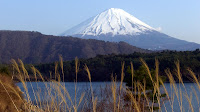 I visited 富士五湖 (Fuji five lakes, Japan) for the first time on 28-29 March 2007 to enjoy its great landscapes with 明日香 (Asuka). We first crawled into the icy 鳴沢氷穴 (Narusawa cave) and 富岳風穴 (Fugaku cave) then hiked the warm 青木ヶ原樹海 (Sea of Trees). Surprisingly, we spotted monkeys in mountains near 西湖 (lake Saiko); no photos of them: they stayed away and ran quickly. After a divine dinner at café M, we spent a lovely night at サニーデビレッジ (Sunnide village). In the morning, we walked around 河口湖 (lake Kawaguchi), and after lunch we visited 浅間神社 (Sengen shrine), which used to serve as a starting point for pilgrimages to 富士山 (Mount Fuji). The weather was extraordinary all along and we had great views of the mountain on the way.
 I visited 富士五湖 (Fuji five lakes, Japan) for the first time on 28-29 March 2007 to enjoy its great landscapes with 明日香 (Asuka). We first crawled into the icy 鳴沢氷穴 (Narusawa cave) and 富岳風穴 (Fugaku cave) then hiked the warm 青木ヶ原樹海 (Sea of Trees). Surprisingly, we spotted monkeys in mountains near 西湖 (lake Saiko); no photos of them: they stayed away and ran quickly. After a divine dinner at café M, we spent a lovely night at サニーデビレッジ (Sunnide village). In the morning, we walked around 河口湖 (lake Kawaguchi), and after lunch we visited 浅間神社 (Sengen shrine), which used to serve as a starting point for pilgrimages to 富士山 (Mount Fuji). The weather was extraordinary all along and we had great views of the mountain on the way.
18 March 2007
Hike in 鎌倉 (Kamakura, Japan) on 18 March 2007
Source and photos: http://horizons.free.fr/seikatsu/eng/memories/2007-03_jp-kamakura.htm
 I hiked 天園ハイキングコース (Ten-en hiking course) in 鎌倉 (Kamakura, Japan) on 18 March 2007 with 明日香 (Asuka) to breath fresh air and admire statues of 天狗 (tengus). The weather was fine for our five kilometers across the forest, with clear views over 横浜 (Yokomaha) in the north-east and the sea in the south. We walked from 鎌倉 (Kamakura) station to 鶴岡八幡宮 (Tsurugaoka-hachimangu shrine) then checked several temples on the way to 瑞泉寺 (Zuisenji temple). There, we started the hike, which took us to 建長寺 (Kenchoji temple); its buildings and statues were great rewards after the physical effort.
 I hiked 天園ハイキングコース (Ten-en hiking course) in 鎌倉 (Kamakura, Japan) on 18 March 2007 with 明日香 (Asuka) to breath fresh air and admire statues of 天狗 (tengus). The weather was fine for our five kilometers across the forest, with clear views over 横浜 (Yokomaha) in the north-east and the sea in the south. We walked from 鎌倉 (Kamakura) station to 鶴岡八幡宮 (Tsurugaoka-hachimangu shrine) then checked several temples on the way to 瑞泉寺 (Zuisenji temple). There, we started the hike, which took us to 建長寺 (Kenchoji temple); its buildings and statues were great rewards after the physical effort.
11 March 2007
Walk in 桜木町 (Sakuragicho, Japan) on 11 March 2007
Source and photos: http://horizons.free.fr/seikatsu/eng/memories/2007-03_jp-yokohama.htm
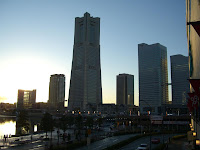 I walked in 桜木町 (Sakuragicho, Japan), a popular area of 横浜 (Yokohama), on 11 March 2007 to enjoy the sunset and night scene. I discovered this place in 2002, during my first stay in Japan, and keep going there because I love its open spaces, relaxing atmosphere, and lovely-human-fauna.
 I walked in 桜木町 (Sakuragicho, Japan), a popular area of 横浜 (Yokohama), on 11 March 2007 to enjoy the sunset and night scene. I discovered this place in 2002, during my first stay in Japan, and keep going there because I love its open spaces, relaxing atmosphere, and lovely-human-fauna.
10 February 2007
Snow festival in 札幌 (Sapporo, Japan) on 08-10 February 2007
Source and photos: http://horizons.free.fr/seikatsu/eng/memories/2007-02-08_jp-sapporo.htm
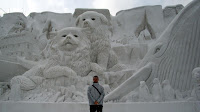 I visited 札幌 (Sapporo, Japan) for the first time on 08-10 February 2007 to attend 札幌雪祭 (Sapporo Snow Festival) and to discover 北海道 (Hokkaido). The festival is famous in Japan for its ice and snow statues but there is more to see, and the trip is really worth it. I was lucky with the weather as it snowed every day, sometimes heavily, but with periods that allowed clear photos. I enjoyed the city and the locals, even spontaneously being talked to by customers at a coffee shop, which never happened in 東京 (Tokyo).
Alone, I freely wandered in town the first day, exploring the streets, relaxing with a warm coffee, and watching statues on day time and night time. The following day, I went up the nearby 藻岩山 (Mount Moiwa) to enjoy beautiful but slightly foggy views from its top. There, I stumbled upon a bar completely made of ice and snow by artists: the bar The Ice, where I had a drink and chatted with the staff and fellow tourists. On my last day, I relaxed and enjoyed views away from the city, at 豊平峡温泉 (Hoheikyo hot spring), an open-air hot spring surrounded by snowy foresty mountains that I definitely recommend.
 I visited 札幌 (Sapporo, Japan) for the first time on 08-10 February 2007 to attend 札幌雪祭 (Sapporo Snow Festival) and to discover 北海道 (Hokkaido). The festival is famous in Japan for its ice and snow statues but there is more to see, and the trip is really worth it. I was lucky with the weather as it snowed every day, sometimes heavily, but with periods that allowed clear photos. I enjoyed the city and the locals, even spontaneously being talked to by customers at a coffee shop, which never happened in 東京 (Tokyo).
Alone, I freely wandered in town the first day, exploring the streets, relaxing with a warm coffee, and watching statues on day time and night time. The following day, I went up the nearby 藻岩山 (Mount Moiwa) to enjoy beautiful but slightly foggy views from its top. There, I stumbled upon a bar completely made of ice and snow by artists: the bar The Ice, where I had a drink and chatted with the staff and fellow tourists. On my last day, I relaxed and enjoyed views away from the city, at 豊平峡温泉 (Hoheikyo hot spring), an open-air hot spring surrounded by snowy foresty mountains that I definitely recommend.
21 January 2007
Trip to 伊豆半島 (Izu peninsula, Japan) on 20-21 January 2007
Source and photos: http://horizons.free.fr/seikatsu/eng/memories/2007-01-20_jp-izu.htm
 I visited 伊豆半島 (Izu peninsula, Japan) on 20-21 January 2007 with 明日香 (Asuka) to discover a new part of Japan and enjoy an open-air hot spring with an oceanic view. To avoid resorts, we directly reached 下田 (Shimoda), where we strolled a while and visited temples; we particularly appreciated the view over the bay from 寝姿山 (Mount Nesugata). In the evening, we rode a fun train to 蓮台寺 (Rendaiji), and spent the night at 金谷旅館 (Kanaya ryokan), which was expensive but huge, with a gorgeous hot spring. The next day, we enjoyed the landscapes of the peninsula by bus. We stopped at 堂ヶ島 (Dogashima) to bath in the tiny 沢田公園露天風呂 (Sawada-koen open-air hot spring) and to see the coast by boat. We then rode a bus to 修善寺 (Shuzenji city), where we visited 修善寺 (Shuzenji temple), and paddled in a mineral hot spring situated on a rocky promontory in the middle of 桂川 (river Katsura) called 独鈷の湯 (Tokko-no-yu).
 I visited 伊豆半島 (Izu peninsula, Japan) on 20-21 January 2007 with 明日香 (Asuka) to discover a new part of Japan and enjoy an open-air hot spring with an oceanic view. To avoid resorts, we directly reached 下田 (Shimoda), where we strolled a while and visited temples; we particularly appreciated the view over the bay from 寝姿山 (Mount Nesugata). In the evening, we rode a fun train to 蓮台寺 (Rendaiji), and spent the night at 金谷旅館 (Kanaya ryokan), which was expensive but huge, with a gorgeous hot spring. The next day, we enjoyed the landscapes of the peninsula by bus. We stopped at 堂ヶ島 (Dogashima) to bath in the tiny 沢田公園露天風呂 (Sawada-koen open-air hot spring) and to see the coast by boat. We then rode a bus to 修善寺 (Shuzenji city), where we visited 修善寺 (Shuzenji temple), and paddled in a mineral hot spring situated on a rocky promontory in the middle of 桂川 (river Katsura) called 独鈷の湯 (Tokko-no-yu).
03 January 2007
Trip to 伊勢 (Ise, Japan) on 03 January 2007
Source and photos: http://horizons.free.fr/seikatsu/eng/memories/2007-01_jp-ise.htm
 I traveled to 伊勢志摩 (Ise-shima, Japan) on 03 January 2007 with 明日香 (Asuka) for a New Year visit to one of the most famous Japanese holy places: 伊勢神宮 (Ise-jingu). The city was extremely crowded, which I expected because Japanese from all over the country pray here during the first days of January for a good year. After our pilgrimage, we walked in 二見 (Futami), breathing the invigorating air of the sea, and enjoying 夫婦岩 (Wedded rocks), a famous pair of rocks connected by a holy rope near 與玉神社 (Okitama shrine), which is my preferred local spot.
 I traveled to 伊勢志摩 (Ise-shima, Japan) on 03 January 2007 with 明日香 (Asuka) for a New Year visit to one of the most famous Japanese holy places: 伊勢神宮 (Ise-jingu). The city was extremely crowded, which I expected because Japanese from all over the country pray here during the first days of January for a good year. After our pilgrimage, we walked in 二見 (Futami), breathing the invigorating air of the sea, and enjoying 夫婦岩 (Wedded rocks), a famous pair of rocks connected by a holy rope near 與玉神社 (Okitama shrine), which is my preferred local spot.
Subscribe to:
Posts (Atom)